The gift is decided after checkout, not before it
Gift orders go wrong in the window between purchase and fulfilment more than any other order type. The brands that win that window turn a fragile order into their best acquisition channel.
Ask any ecommerce team which orders generate the most support tickets and they will tell you the same thing. Gift orders.
The reason is structural. On every other order, the person paying is the person receiving, and they know their own address, their own schedule and their own name. On a gift order, the buyer is working from memory about somebody else.
They half-remember the address. They have no idea when the recipient will be home. They skip the message field in a hurry and remember at 11pm.
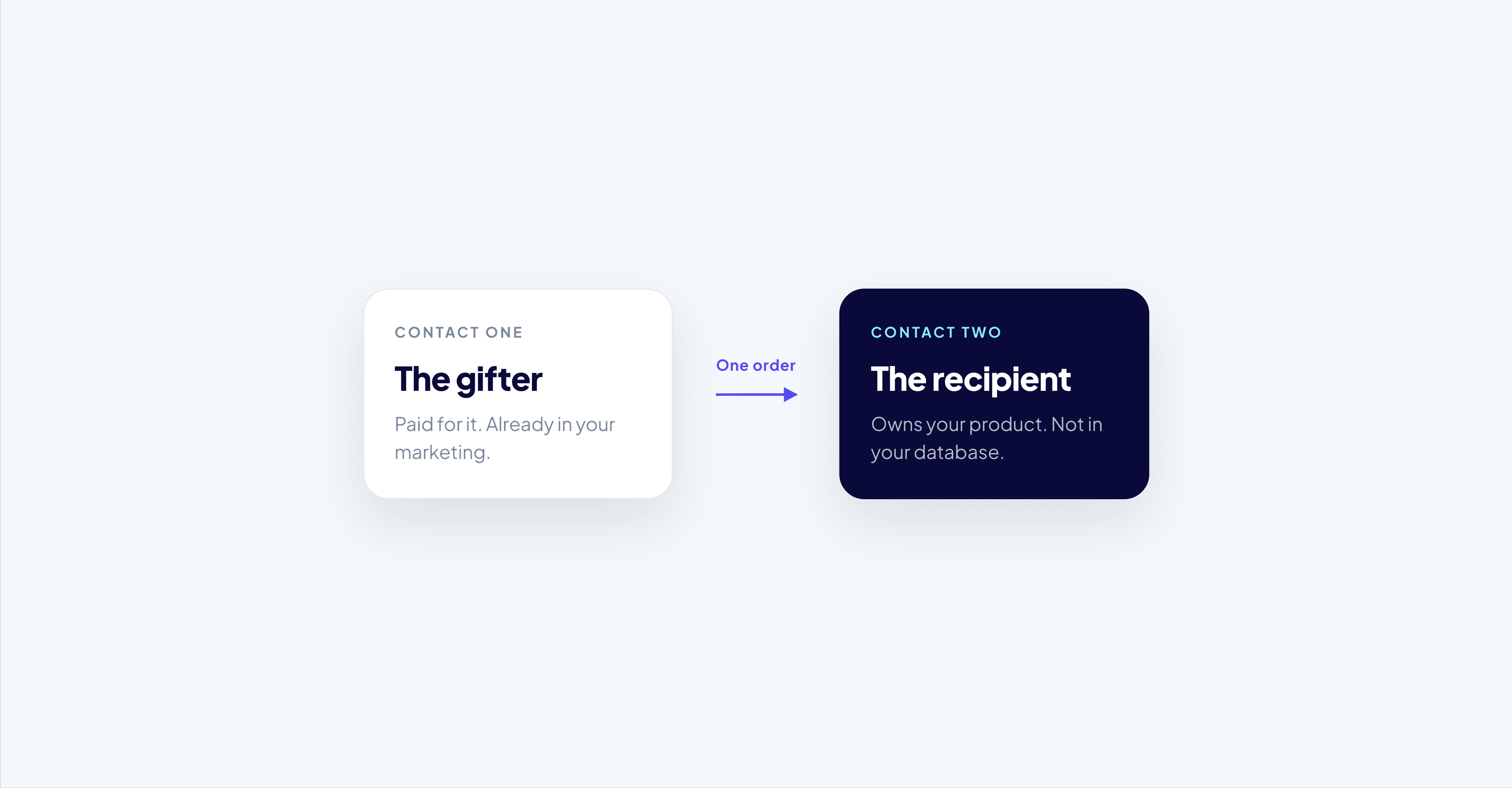
And here is the part that should bother you: a gift order is the most valuable order to get right, because the person on the other end of it is a customer you have not paid to acquire.
The window that decides it
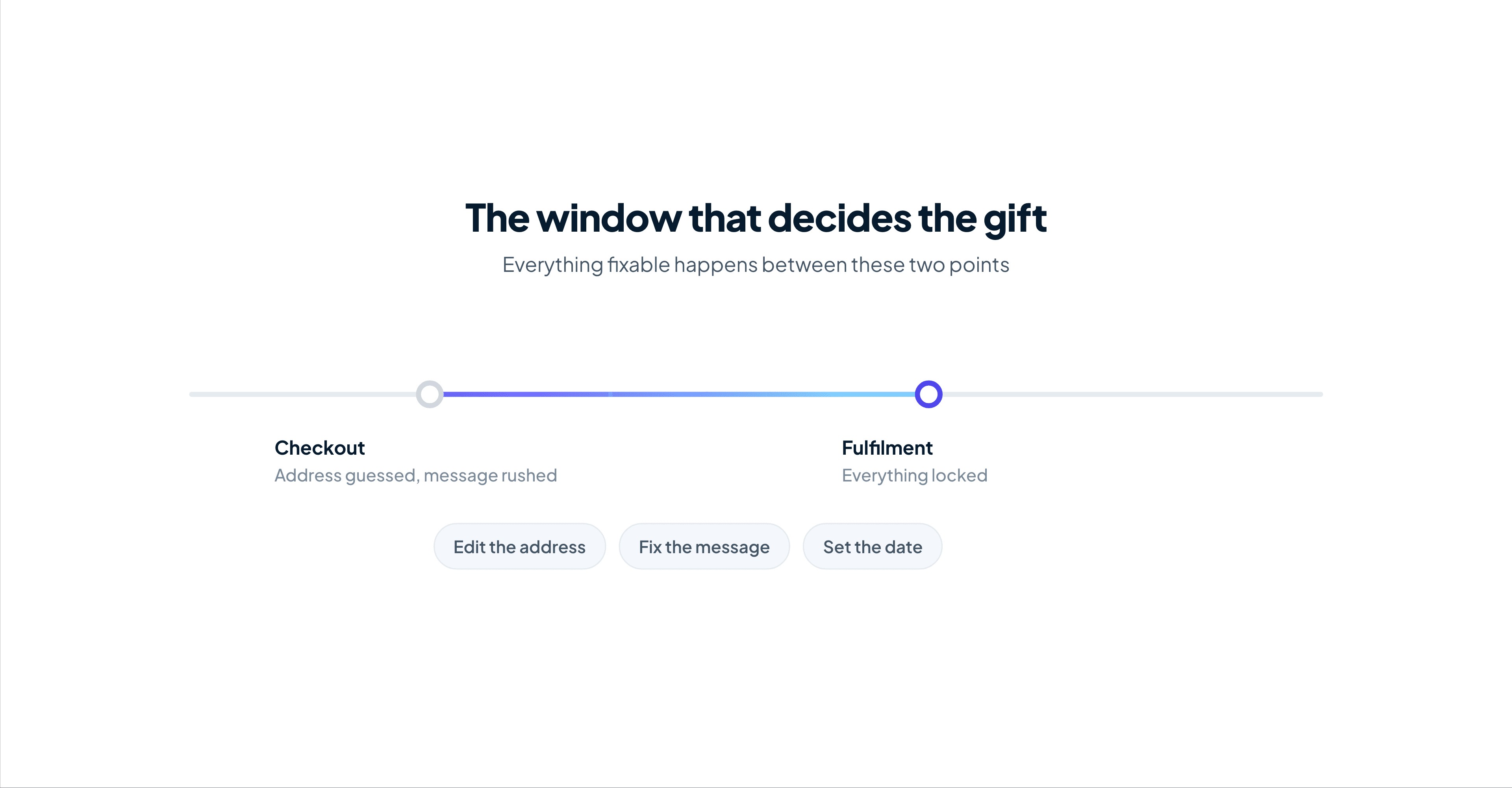
Everything fixable on a gift order happens between checkout and fulfilment. Once the box is picked, the address is final, the message is printed, and whatever was wrong stays wrong.
The brands doing this well have realised something simple: the gift is not decided at checkout. It is decided in the days afterwards, and it is worth designing for.
Giftnote POV
On a normal order, a post-purchase mistake costs you a support ticket. On a gift order it costs you the recipient — who was going to be your next customer.
Let people fix their own mistakes
The highest-leverage move is letting customers correct the order themselves before it ships.
Tools like Order Editing let a buyer change a shipping address, swap a variant or cancel without emailing anyone. On ordinary orders that is a nice convenience. On gift orders it is the difference between a present arriving and a present arriving at the buyer's ex-flatmate's house.
The operational return is immediate. Every self-served correction is a support ticket you never receive, a re-ship you never pay for, and a gift that lands where it was meant to.
Stop tying the message to the parcel
The forgotten gift message is the most common failure of all, and the most avoidable.
If the note is a card printed at fulfilment, the message dies the moment the order is picked. If it is delivered digitally to the recipient, it can be written, rewritten or added long after checkout, and it can arrive on a schedule that has nothing to do with the courier.
That is how gifting works on MìLà, the frozen soup dumpling brand. They put the gift note at the centre of a published three-step process — choose your gift, add a digital gift note, ship it fresh — so customers know it exists before they reach the cart rather than discovering the field as they check out.
The message arriving separately also means it arrives well. Not a line of small print on a packing slip, but its own branded moment, delivered on the day the parcel lands.
Control when it arrives, not just when it leaves
For anything perishable or tied to a date, the buyer needs to control the arrival rather than the dispatch.
Premier Catch, the Seattle wild-seafood brand, built its entire corporate gifting programme around this. Buyers choose the ship date, so a company can plan its December client gifting in October and know the boxes land in the week they intended, with recipients told in advance so someone is home to receive them.
For a brand shipping frozen king crab, that is the difference between a memorable gift and a write-off. For everyone else, it is the difference between a birthday present arriving on the birthday and arriving three weeks early.
The upsell nobody runs
The order confirmation on a gift order is one of the most under-used surfaces in ecommerce.
The buyer has just committed, they feel good about it, and they are still thinking about the recipient. That is the moment to offer the things that make the gift better rather than bigger — wrap, a card upgrade, the companion product, a second gift for the person they have also forgotten.
It converts because you are not asking them to spend more on themselves. You are offering to make them a slightly better gift-giver.
And then the part that pays for everything
Get the window right and the gift lands properly. But the reason to care is what happens next.
When the message reaches the recipient, they stop being an anonymous shipping address and become a known contact with their own opt-in — arriving in your marketing as a distinct audience, at the precise moment they are holding your product and feeling warmly about whoever sent it.
That is not a support-cost saving. That is an acquisition channel most brands are currently posting through the letterbox and forgetting about.
Turn gift orders into customers you did not pay for
Book a personalised demo, or install Giftnote on your Shopify store and try every plan free for 30 days.
Frequently asked questions
Why do gift orders generate more support tickets than normal orders?
Because the buyer is entering someone else's address and guessing at timing, and neither mistake surfaces until the recipient is affected. Self-service order editing and editable gift messages remove most of them.
Can customers edit a Shopify order after checkout?
Not meaningfully with native Shopify. Apps such as Order Editing let customers change the shipping address, swap variants or cancel up until fulfilment.
Can you add a gift message to an order after it has been placed?
Not with a printed card, because the message is fixed at fulfilment. A digitally delivered gift message can be added or edited right up until it sends, which is how Giftnote works.
How do you make a gift arrive on a specific date?
Schedule the gift message so the note lands on the occasion, and where the product allows it, let the buyer choose the ship date so the parcel leaves at the right time. Premier Catch does exactly this for frozen seafood.
What is the best post-purchase upsell for a gift order?
Offers that improve the gift rather than enlarge the basket: wrap, a card upgrade, a companion product, or a second gift for another recipient.
Why is a gift recipient valuable to a brand?
Because they are usually new to the brand and arrive with a personal recommendation attached. Around 74% of gift recipients have never bought from the brand before, and they convert at a meaningful rate when the brand actually captures them.